
 en
en
2025-07-15
EVSP: Emergency Vehicle Signal Preemption
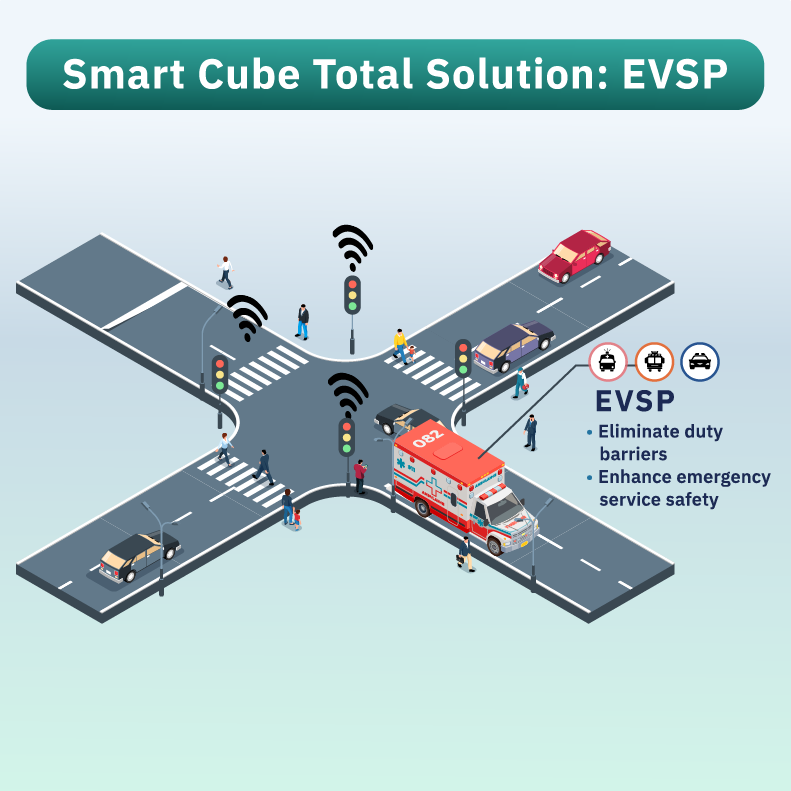
Transform Every Intersection into a Smart Node for Emergency Access
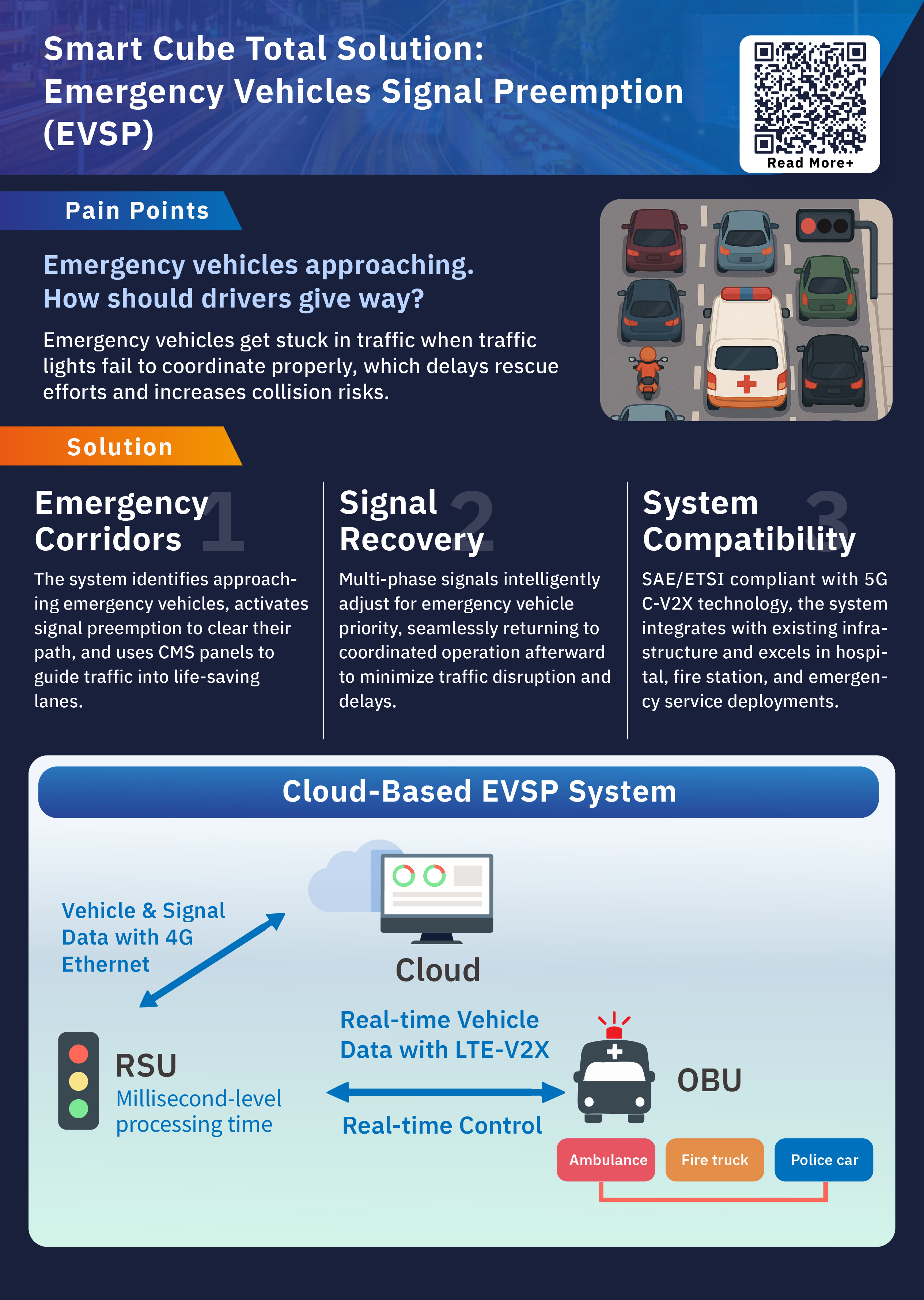
EVSP (Emergency Vehicle Signal Preemption) is a solution that gives emergency vehicles right-of-way at intersections. When an emergency vehicle approaches, EVSP automatically switches traffic signals to green and activates CMS (Changeable Message Sign) to inform road users of the vehicle’s direction—creating a dynamic emergency corridor when every second matters.
CMS: Changeable Message Sign
Clear, prominent visual messaging for all road users.
At busy urban intersections, every second matters.
Traditional sirens often struggle against traffic noise and distractions like Bluetooth headsets or in-car audio systems.
Our CMS (Changeable Message Sign) system uses prominent LED panels to broadcast emergency vehicle alerts in real time. When a rescue vehicle approaches, the CMS instantly displays clear visual warnings—ensuring drivers see what they may not hear.
Technology that clears the way for emergency response, turning urgency into safety.
EVSP Solution Capabilities
Unlock Emergency Corridors
EVSP switches signals to green and uses CMS to inform the public in real time—securing a safe path for emergency response vehicles.
Rapid Signal Recovery
Actively controls multiple signal phases to keep emergency vehicles moving. After passage, intersections recover gradually using a 4+1 signal compensation mechanism to reduce traffic impact.
SmartCube at the Core
SmartCube Middleware integrates sensing and control to enable low-latency, high-frequency command loops—enabling two-way communication between signals and the traffic control center across corridor- or district-level networks.
Standards and Compatibility
-
Supports 5G C-V2X / DSRC communication protocols and complies with SAE and ETSI standards.
-
Modular design, compatible with existing infrastructure
-
Ideal for deployment around hospitals, fire stations, and emergency-prone areas
CMS Real-Time Messaging
While EVSP prioritizes traffic signals, the CMS variable message sign simultaneously engages to deliver clear visual guidance at intersections, enabling road users to respond and yield immediately.
4 + 1 Signal Compensation Mechanism
To reduce disruption caused by signal preemption, EVSP implements five recovery strategies based on road structure, direction hierarchy (main vs. side roads), and real-time traffic context.
These strategies ensure fairness for waiting drivers, while minimizing delay and restoring order before, during, and after emergency passage.
Plan 0: Original Controller Simulation
Compensates signal times based on the original time ratio.
Plan 1: Simultaneous Return
Applicable scenario: This setup is ideal for intersections where the distinction between main and side roads is unclear, and bus routes typically follow the side road.
Plan 2: Weighted Allocation
Applicable scenario: Suitable for intersections with a clearly defined hierarchy between the main road and side road.
Plan 3: Main Road Priority
Applicable scenario: Designed for intersections with a clear main-side road layout, where the main road is under 20 meters wide and the side road is a narrow alley.
Plan 4: One-Cycle Fast Compensation
Flexible use: This configuration can be seamlessly applied across Plans 1 to 3.
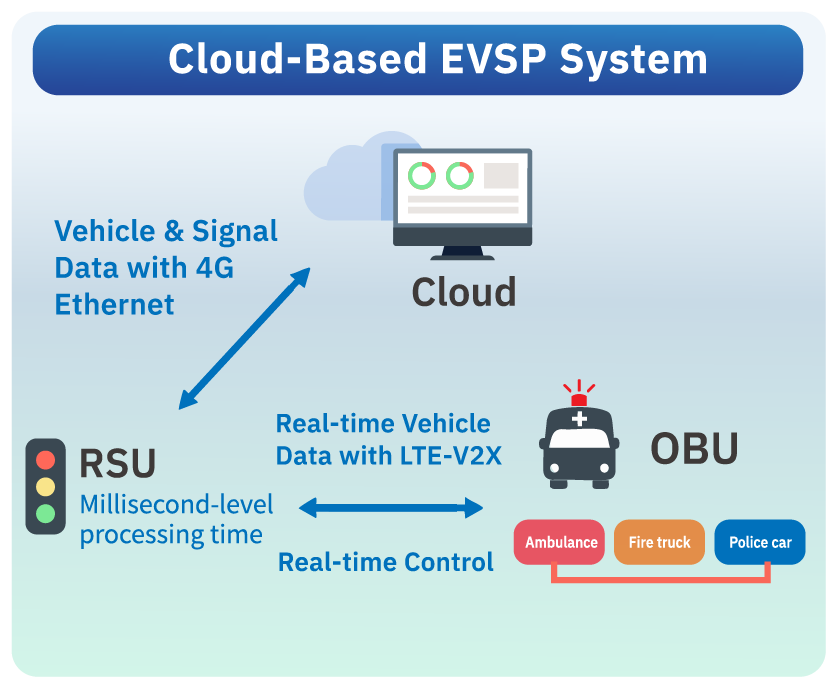
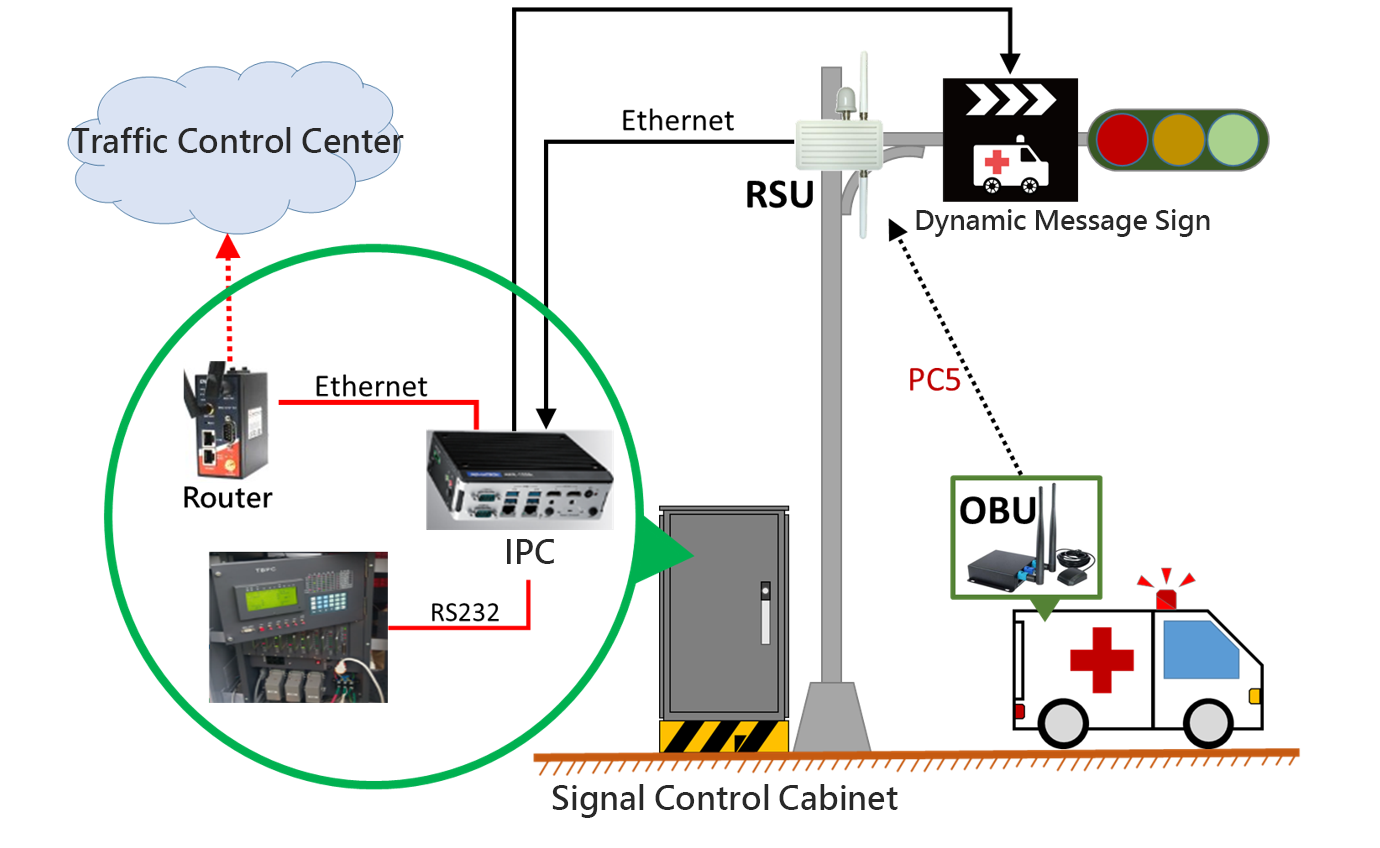
System Architecture Diagram
Sound-Based Emergency Vehicle Detection System
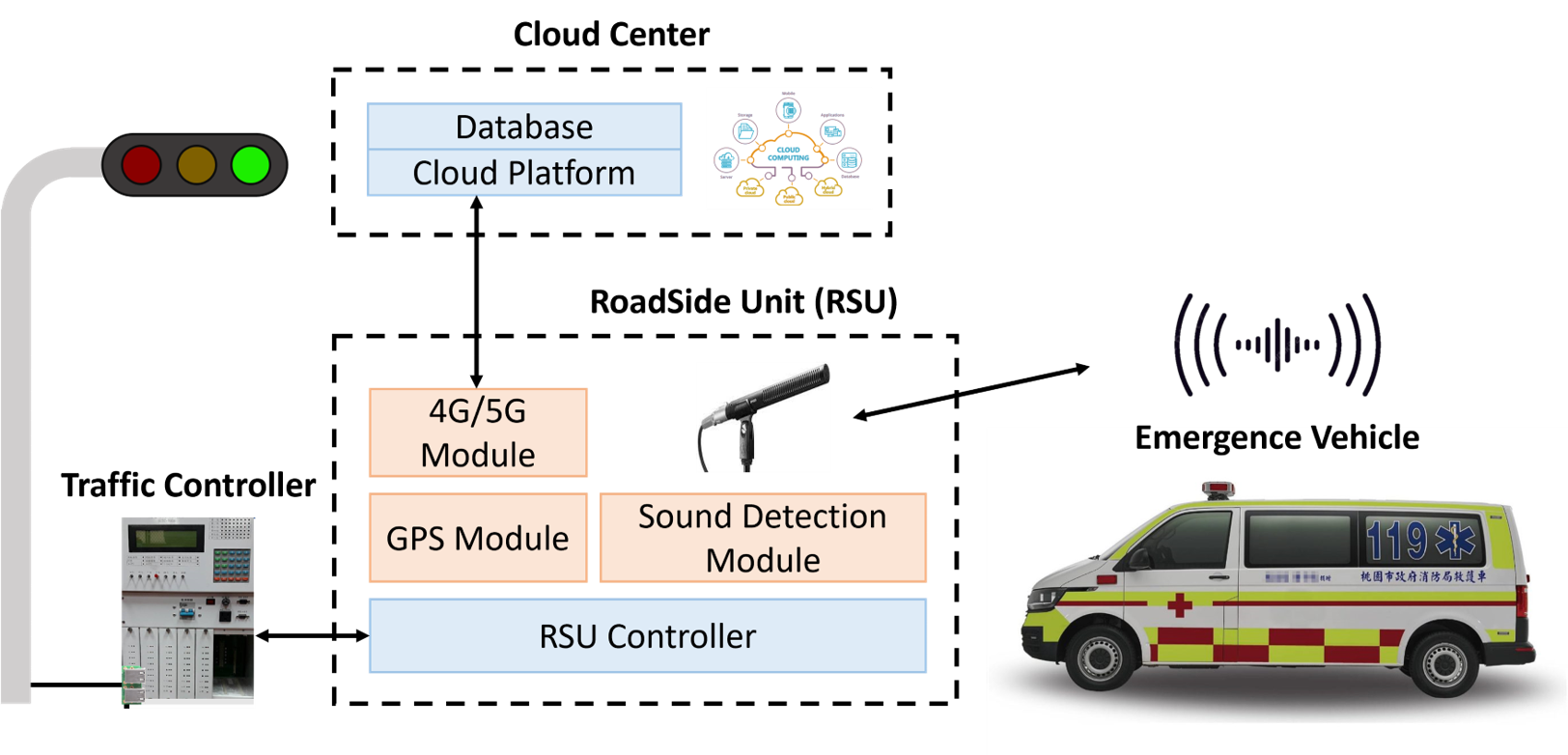
Through AI-driven siren sound recognition, emergency vehicles can be identified even when line-of-sight is blocked.
Only a microphone is required—no in-vehicle installation—making deployment fast and scalable.