
 en
en
2025-07-15
SmartCube:ATSC

Traffic Signals That Respond to the Present—And Anticipate the Future
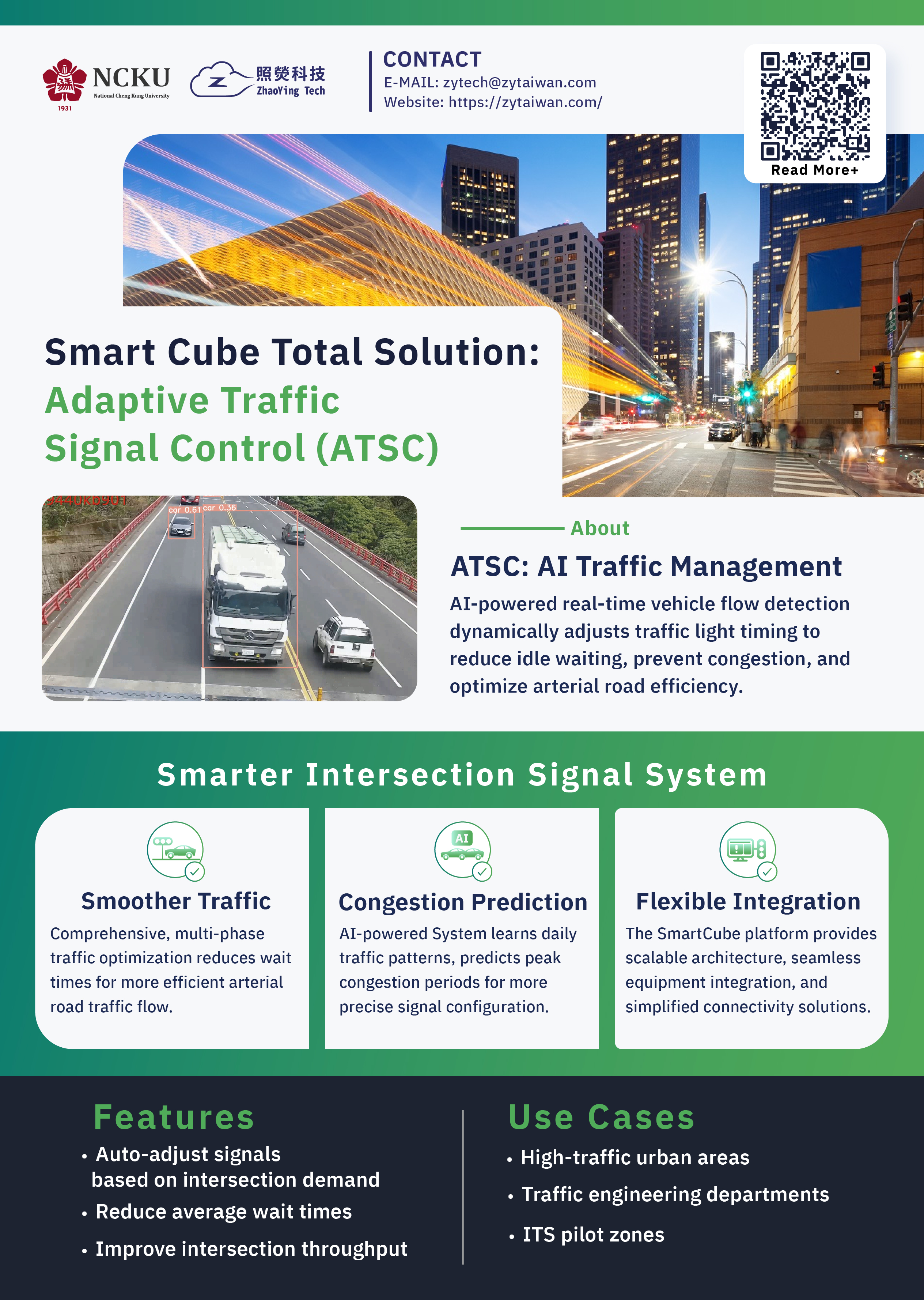
ATSC (Adaptive Traffic Signal Control) replaces traditional fixed-time signal plans with AI-driven adaptive control, optimizing signal timing in real time based on actual traffic flow—maximizing intersection efficiency.
Intersections are critical nodes in a smart city. ATSC transforms signal systems from static, one-way, and closed, into dynamic, two-way, and open systems. These smart signals adapt to human and traffic behavior, enable remote management, and ensure intersections are responsive, controllable, and situationally aware.
Responding to Real-Time Needs and Regional Patterns
“90 seconds of green light for just one passing car.”
Urban traffic is dynamic, but static signal systems can't keep up with real-time conditions. Adaptive control is essential—especially for busy arterials and during peak hours—to manage demand with perception and flexibility.
ATSC: Solution Highlights
Optimize Intersection Throughput
No more waiting at an empty red light. ATSC transforms signal controllers into intelligent units that detect real-time traffic and dynamically adjust signal plans to relieve congestion and improve flow.
AI Models for Behavioral Prediction
ATSC learns from daily traffic behavior and builds predictive models to anticipate peak hours—delivering more precise signal adjustments that match localized conditions.
From Reactive to Proactive Signal Control
ATSC evolves from instant signal adjustments to building location-specific behavioral models. These models support long-term adaptability for constantly changing urban traffic patterns.
SmartCube Adaptive Engine
Smart cities adapt to human needs. Powered by SmartCube Middleware, the system collects and predicts regional traffic patterns, allowing signals to evolve with the pace of urban life.
The SmartCube platform supports modular integration, enabling quick, seamless connection of diverse devices and infrastructure.
Key Features & Advantages
-
Automatically adjusts signals based on real-time intersection needs
-
Reduces average wait time and increases intersection capacity
-
AI-powered adaptive control maximizes efficiency through continuous traffic sensing
-
Enables remote monitoring and flexible configuration via SmartCube Middleware
Deployment Scenarios
-
Urban areas with heavy traffic volume
-
Transportation engineering departments
-
Smart mobility pilot zones
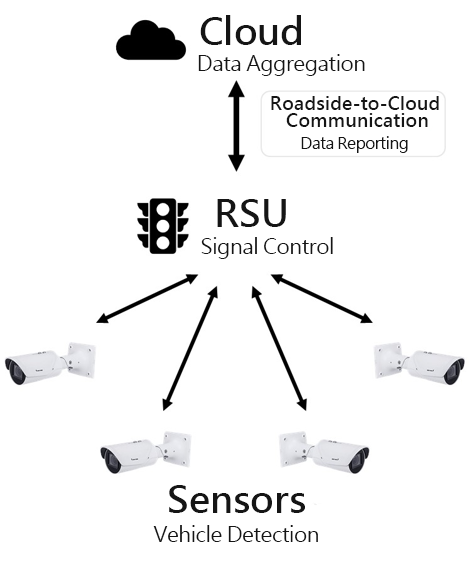
System Architecture Diagram